
Photoelectric Sensor Replacement for Packaging Machine
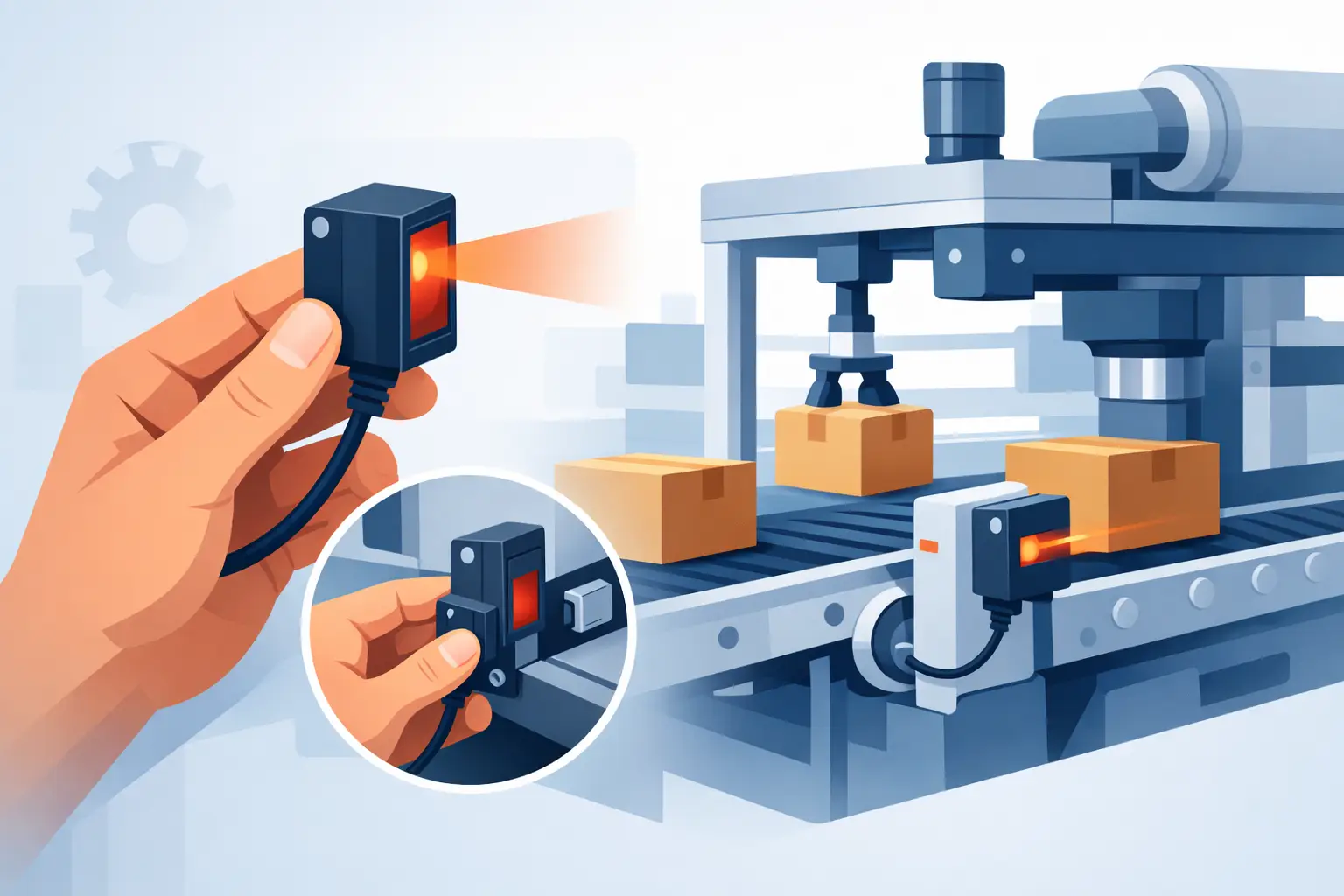
A packaging line usually tells you a sensor is failing before it stops completely. Missed product counts, unstable label detection, false jams, and intermittent bottle or carton sensing are common early signs. When photoelectric sensor replacement for packaging machine applications becomes necessary, speed matters, but matching the new part correctly matters more.
Why packaging machines are hard on photoelectric sensors
Packaging equipment puts sensors in a rough operating environment. Film dust, label backing, glue mist, vibration, washdown, and tight mounting spaces all work against stable sensing. A sensor that performs well on a bench can fail quickly on a vertical form fill seal machine, cartoner, case packer, or conveyor infeed if the housing rating, lens type, or response time does not fit the job.
That is why replacement should not start and end with voltage and thread size. On packaging lines, the sensing target changes too. Clear film, glossy pouches, shrink wrap, dark printed registration marks, and irregular product spacing can each require a different optical method. If the original device was selected for a specific detection challenge, a quick substitute can create repeat faults that look like mechanical problems but are actually sensor mismatch.
Start with the exact function, not just the form factor
The first check in any photoelectric sensor replacement for packaging machine service work is the sensing principle. Through-beam, retroreflective, polarized retroreflective, background suppression, and contrast sensors can look similar from the outside while solving very different detection tasks.
Through-beam sensors are common where reliability is the priority and there is room for separate emitter and receiver mounting. They handle long distances and difficult targets well, but alignment takes more time. Retroreflective sensors simplify installation by using one sensor body and a reflector, though shiny product and clear packaging can create false returns unless the unit is designed for that application. Background suppression is useful when products vary in color but appear at a fixed distance. Contrast sensors are typically used for print mark registration and indexing on packaging film.
If the machine has been running reliably for years, replacing like-for-like is often the safest path. If the original part is obsolete, the replacement has to match the sensing method first, then the mechanical and electrical details.
What to verify before ordering a replacement
Part number accuracy is still the fastest route when it is available. Major brands such as Sick, Keyence, Omron, Allen-Bradley, IFM, Schneider, and Siemens often have multiple revisions of sensors that appear interchangeable but differ in output type, connector orientation, or setup method. A one-character suffix can separate a PNP normally open output from an NPN complementary output.
Before sourcing a replacement, confirm the supply voltage, output configuration, sensing distance, light source, housing style, cable or quick-disconnect requirement, and mounting dimensions. Check whether the machine input card expects PNP or NPN logic. Verify whether the PLC program or machine controller is using a normally open or normally closed state for fault handling. In packaging machinery, that detail is easy to miss during a fast maintenance call, and it can leave the machine in a constant blocked or faulted condition after installation.
Environmental rating also matters. If the sensor is mounted near washdown zones, liquid splash, or aggressive cleaning agents, an inadequate housing rating shortens service life. If the machine runs at high cycle rates, response time and repeatability become as important as range.
Common replacement mistakes that create repeat downtime
One frequent mistake is replacing a clear-object sensor with a standard retroreflective unit because the mount and connector fit. The line may run during setup, then fail when film tension changes or the product angle shifts. Another is selecting a sensor with a wider beam than the original, which can detect adjacent machine parts, guide rails, or product buildup.
A third issue is connector compatibility. M8 and M12 connectors are standard across many devices, but pin assignments are not always identical across brands or product families. A maintenance team may install the new sensor, see power present, and still have no switching signal because the output pin differs from the original cable assembly.
Teach-in and setup behavior also vary. Some sensors are factory-set, while others need manual adjustment or remote teach. On a packaging machine where product dimensions change between SKUs, incorrect teach settings can look like random line instability.
OEM part or cross-brand alternative
It depends on the machine, the urgency, and the level of validation required. An OEM-specified replacement reduces risk when the machine builder used a specialized sensor for difficult materials or high-speed registration. That is often the right choice for film packaging, transparent containers, or applications tied closely to machine timing.
A cross-brand replacement can be practical when the sensing task is straightforward and the technical match is exact. Standard carton detection on a conveyor, tray presence at a fixed stop, or case count verification may allow more flexibility. But cross-brand should never mean approximate. It should mean same sensing principle, same electrical behavior, compatible mounting, and comparable response performance.
For procurement teams, the best path is usually the one that reduces troubleshooting after delivery. A lower-cost substitute does not save money if maintenance has to modify brackets, repin connectors, or debug PLC input behavior during production.
Installation checks after photoelectric sensor replacement for packaging machine lines
Once the replacement arrives, installation should include more than power-up verification. Inspect the bracket for vibration, lens contamination, and cable strain before assuming the old sensor was the only failure. On packaging machines, loose mounts and damaged cables are common root causes.
After mounting, verify alignment under actual running conditions, not only with the machine idle. Product movement, guard vibration, and web tracking can change what the sensor sees. Check the switching indicator against the PLC input status and confirm the signal remains stable over several cycles. If the machine uses high-speed counting or registration control, validate at production speed rather than jog speed.
It is also good practice to review sensor placement relative to reflectors, stainless machine surfaces, and nearby indicators. Reflected light from polished hardware can affect performance in compact packaging stations. If the replacement has an adjustable sensitivity or timing filter, set it conservatively and test with the full product range.
When legacy packaging machines complicate replacement
Older packaging equipment often uses discontinued sensor families, proprietary mounting hardware, or outdated connector standards. In those cases, replacement becomes a sourcing and compatibility exercise, not just a maintenance task. Legacy machines may also have limited documentation, especially if they have changed hands or been rebuilt.
This is where exact model identification helps. Nameplate data, wiring diagrams, controller input type, and even photos of the installed sensor can prevent ordering delays. If the original unit is gone, identifying the application itself is the next best route: what target is being detected, at what distance, under what line speed, and with what output expectation.
For buyers managing multiple plants, standardizing approved replacements by machine type can reduce future downtime. That approach works well for common tasks such as conveyor presence detection or carton edge sensing. It is less effective for specialty applications like transparent label web control, where the sensor choice is usually more specific.
Sourcing strategy matters as much as specification
When a line is down, technical fit and procurement speed have equal weight. Buyers need access to recognizable manufacturers, clear product identification, and support that can confirm whether a replacement is truly compatible. That is especially true when comparing current production models against obsolete part numbers.
A catalog-driven supplier with broad automation coverage can help streamline that process because packaging machines rarely fail one component at a time. A sensor issue may surface alongside cable damage, connector wear, PLC I/O concerns, or bracket hardware replacement. Consolidating those purchases saves time during urgent maintenance events.
American Automation 24 fits that buying pattern by supporting cross-brand sourcing for industrial automation components used in production equipment. For maintenance and procurement teams, that kind of access matters most when exact part numbers need to be matched quickly and ordered without added delay.
Choosing the right replacement without creating a new problem
The best sensor replacement is not the one that powers up. It is the one that restores stable detection under the real conditions of the packaging line. That means matching the sensing method, output logic, connector and pinout, environmental rating, response speed, and mounting geometry before the order is placed.
If there is any uncertainty, slow down long enough to verify the application. A ten-minute check against the machine function can prevent hours of troubleshooting once the line is supposed to be back in service. On packaging equipment, sensor replacement is rarely difficult, but getting the wrong sensor is easy. The right match keeps the machine moving and keeps the next shift from inheriting the same fault.